
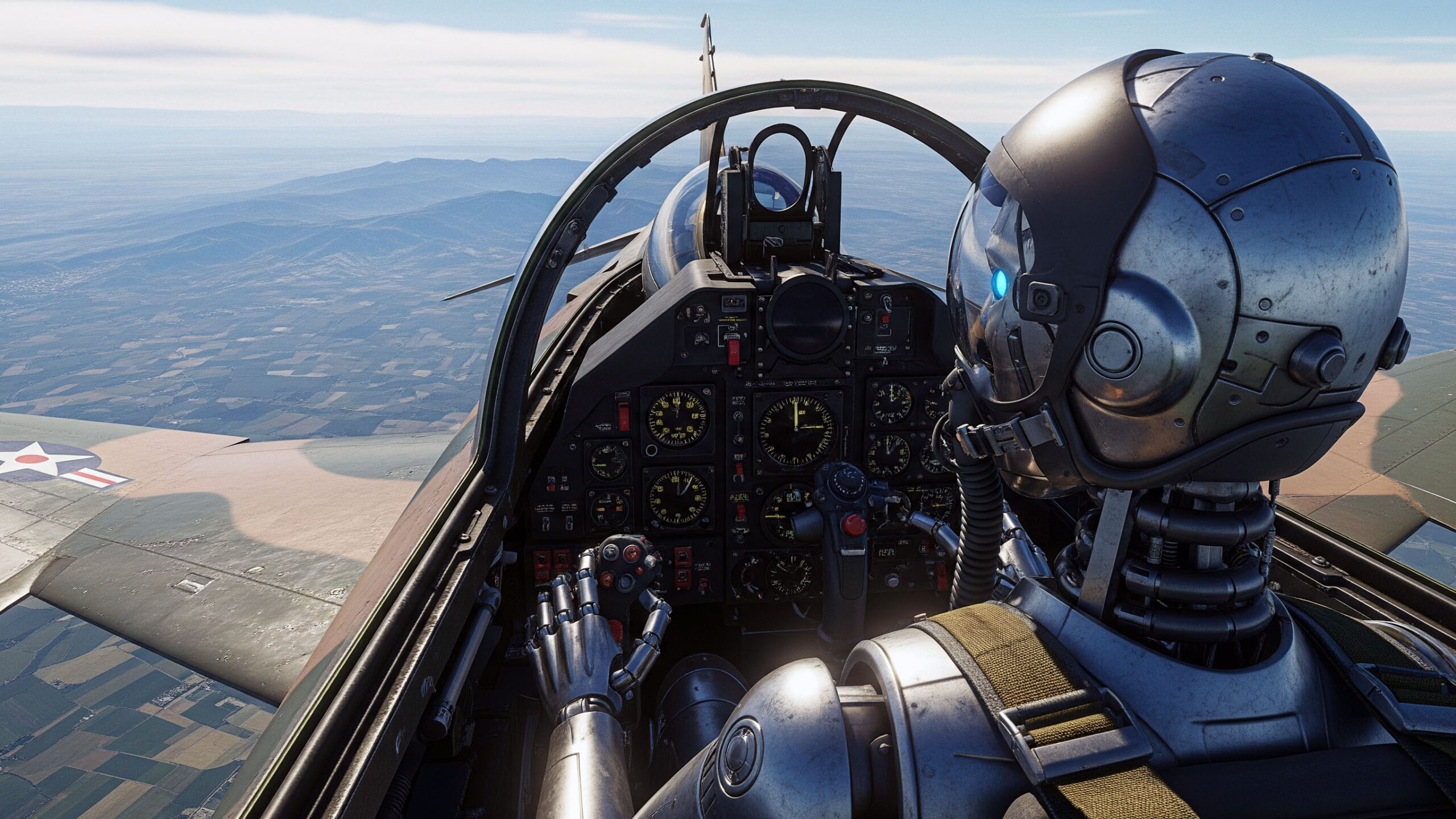
- What: Discussion on the evolution of security operations centers using AI.
- Impact: Relevant to cybersecurity professionals and organizations.
SOC , AI/ML , Security Operations From OODA to SUDA: Why the Agentic SOC has to be customizable April 21, 2026 Share By Paul Wagenseil Created with SocialSight AI. Security operations centers (SOCs) are entering a new phase of evolution driven by artificial intelligence . Over the past few years, AI has dramatically improved cybersecurity incident detection and triage, but it has also exposed a new bottleneck: decision-making. AI can now surface and analyze thousands of alerts, yet human analysts remain responsible for deciding what to do next and acting on it. The result is a growing "decision gap" in which detection accelerates, but response lags. To address this, the traditional military-based OODA loop borrowed by cybersecurity practitioners — observe, orient, decide, act — is giving way to a more SOC-specific model: SUDA, or see, understand, decide, act . Click here to read the BlinkOps white paper "The SecOps Decision Gap: 2025 Trends & 2026 Outlook." Designed for environments in which decisions must be made continuously and at scale, SUDA reflects how modern AI-driven SOCs truly operate. It is not just a framework: SUDA is the foundation for how agentic, AI-assisted SOCs will function in the near future. What the SUDA loop is and how it helps SOC decision-making The SUDA loop reframes decision-making for modern security operations by aligning it with how data, context, and automation interact in AI SOCs . Security tools have historically been fragmented across these stages, with separate systems responsible for visibility, analysis, decision support, and response. SUDA brings these stages together: See: Collect telemetry across the environment from SIEM, EDR, cloud , identity , and even business applications. This becomes the SOC's sensory layer. Understand: Correlate and enrich signals with context such as user identity, asset criticality, and behavioral baselines to turn raw data into meaningful insight. Decide: Apply reasoning, often powered by AI, to determine whether an alert is a true threat, to assign risk, and to recommend actions. Act: Execute remediation across systems, with appropriate governance and human oversight. This model reflects a key reality: SOCs don't make isolated decisions. They continuously interpret signals, weigh context, and act across complex environments. SUDA enables AI to participate in that loop not just by accelerating individual steps, but by connecting them into a coherent decision flow. Crucially, SUDA reduces the cognitive burden on human analysts. Instead of manually stitching together data from multiple tools, analysts receive decisions with context and recommended actions, allowing them to focus on oversight and exception handling. How the SUDA loop can break down barriers among fragmented tools One of the biggest challenges in modern SOCs is fragmentation. Different tools handle different parts of the security lifecycle: SIEMs collect logs, AI SOC tools investigate alerts, and SOAR or ITSM platforms execute responses. These systems often operate in isolation, creating delays and inefficiencies when the data they surface must be collected and analyzed. In its recent white paper " The SecOps Decision Gap: 2025 Trends & 2026 Outlook ," BlinkOps highlights this fragmentation clearly, noting that most solutions available in 2025 could handle only one or two stages of the SUDA loop, such as seeing and understanding, or understanding and deciding, but rarely the full process. SUDA addresses this discrepancy by creating a unified workflow: It eliminates handoffs between tools by integrating data ingestion, reasoning, and action. It reduces latency between detection and response, since decisions no longer wait on manual coordination. It aligns human and machine roles , with AI handling routine decisions and humans focusing on high-risk or ambiguous cases. For example, an AI SOC platform using SUDA can ingest an alert from an EDR tool , enrich it with identity and cloud context, determine that it represents a credential compromise, and automatically revoke sessions, all within seconds. Previously, this would have required multiple tools and human intervention at each step. This convergence also reflects a broader industry shift from "data gravity" to "workflow gravity." As the white paper notes, visibility alone is no longer enough. Organizations must own the remediation workflow to achieve real security outcomes. How SUDA will lead to unified agentic platforms in AI SOCs The adoption of SUDA is driving the emergence of unified, agentic SOC platforms — systems that can execute the full decision loop autonomously while remaining configurable to each organization's needs. These platforms combine capabilities that were previously separate: AI-driven triage and investigation Workflow orchestration and automation Case management and governance Integration across thousands of systems Rather than acting as point solutions, the platforms function as agentic layers that sit above the existing security stack, connecting tools and executing workflows across them. This is where customization becomes critical. Every SOC has different risk tolerances, approval processes, and operational priorities. A rigid, "black box" AI SOC cannot accommodate these differences. By contrast, a customizable SUDA-driven platform allows organizations to define: Which decisions can be automated When human approval is required How actions are executed and audited This flexibility ensures that AI enhances, rather than overrides, the organization's security posture. The end state is what BlinkOps describes as an Agentic Security Operations Platform (ASOP), whereby the SUDA loop becomes the core process across all security functions. In this model, success is no longer measured by how many alerts are processed, but by how many issues are resolved, shifting the focus from activity to outcomes. As AI SOCs mature, those built around SUDA and designed to be customized to real-world workflows will deliver the greatest value. They will not just detect threats faster; they will decide and act on them with speed, context, and precision. An In-Depth Guide to AI Get essential knowledge and practical strategies to use AI to better your security program. Learn More Paul Wagenseil Paul Wagenseil is a custom content strategist for CyberRisk Alliance, leading creation of content developed from CRA research and aligned to the most critical topics of interest for the cybersecurity community. He previously held editor roles focused on the security market at Tom’s Guide, Laptop Magazine, TechNewsDaily.com and SecurityNewsDaily.com. Related Vulnerability Management Another Cisco Catalyst SD-WAN Manager bug added to CISA list Steve Zurier April 21, 2026 CISA flags new Cisco SD-WAN flaw amid active exploit chains, urging rapid patching. Security Operations The CISO role has always been brutal. Here is what makes some survive it. Peter Liebert April 21, 2026 CISOs should guide risk decisions with options, aligning security with business priorities. SOC Your SOC, not the vendor’s: Why the AI SOC has to be customizable, not a black box Paul Wagenseil April 20, 2026 Only organizations that invest in customizable, agentic AI SOCs will turn AI into a strategic advantage. Get daily email updates SC Media's daily must-read of the most current and pressing daily news Business Email By clicking the Subscribe button below, you agree to SC Media Terms of Use and Privacy Policy . Subscribe Related Terms Blue Team Cold Warm Hot Disaster Recovery Site Countermeasure Cron Daemon Disaster Recovery Plan (DRP) You can skip this ad in 5 seconds