
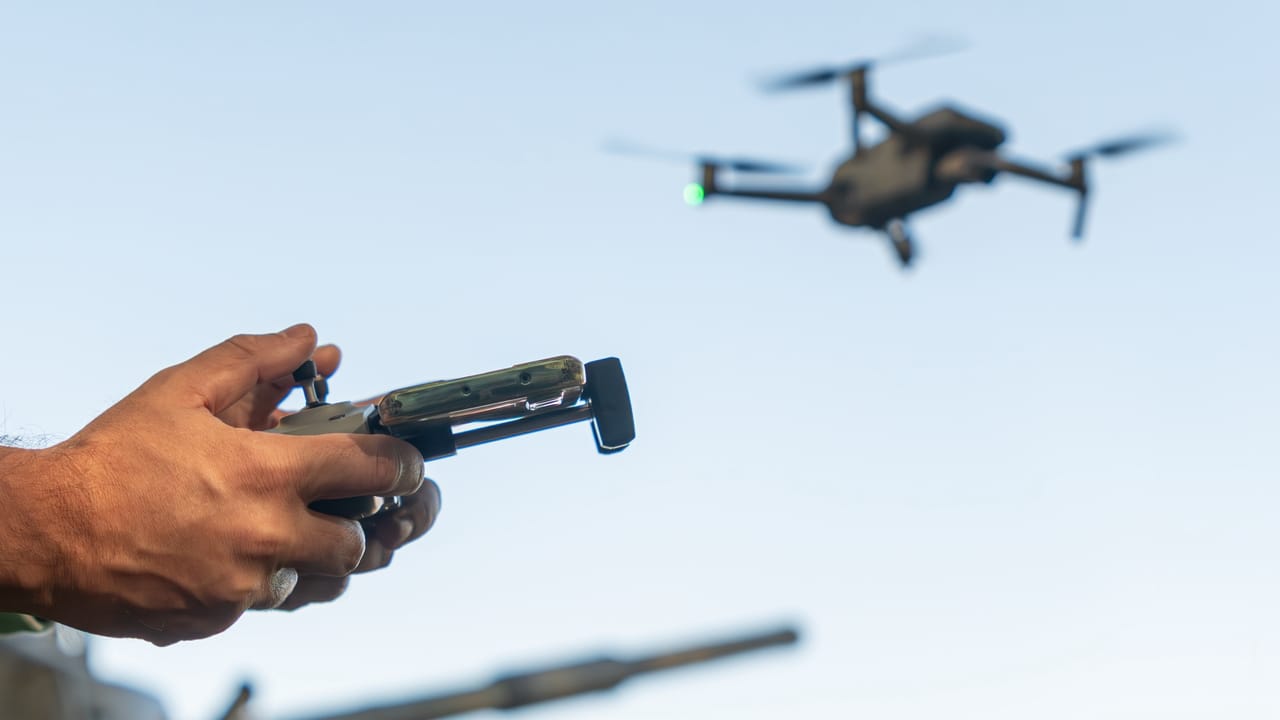
- What: Experts warn about wireless and drone threats during major events
- Impact: Cities hosting events need to enhance security measures
TechTarget and Informa Tech’s Digital Business Combine. Dark Reading Resource Library Black Hat News Omdia Cybersecurity Advertise NEWSLETTER SIGN-UP Cybersecurity Topics World The Edge DR Technology Events Resources CYBER RISK THREAT INTELLIGENCE ICS/OT SECURITY MOBILE SECURITY NEWS Cities Hosting Major Events Need More Focus on Wireless, Drone Defense Major events like the FIFA World Cup need to look beyond traditional physical and cyber security to active and passive wireless threats, say experts. Robert Lemos,Contributing Writer February 27, 2026 4 Min Read SOURCE: MELNIKOV DMITRIY VIA SHUTTERSTOCK With the FIFA World Cup coming to the United States, Canada, and Mexico this year, cybersecurity experts are warning that the risks are rising from rapidly evolving threats such as drones and wireless surveillance. Wireless communications have grown in importance and criticality, with connections to security systems, operational technology (OT), and application connectivity all expanding dramatically over the past decade. One major application for wireless communications are drones, which have been used increasingly in conflict zones and pose potentially greater dangers for civilian populations. The concern is that threat actors will translate what they have learned to civilian settings, says Cordell Bennigson, CEO for the US market at R2 Wireless, a company focused on real-time radio-frequency monitoring. "There's definitely a risk of disruption to operational technology (OT), such as stadium systems, traffic management, or public safety communications, particularly when those systems have wireless components," he says. "The key issue is not having visibility, because cities can't defend what they can't see." Related:PCI Council Says Threats to Payments Systems Are Speeding Up In 2026, the FIFA World Cup is expanding to 16 stadiums in cities peppered throughout Canada, Mexico, and the US. The tournament will be bigger in every way from past events, with 48 teams playing 104 games, and will require a massive increase in reliance on technology and automation. At the same time, physical cyber threats have matured rapidly since Russia invaded Ukraine four years ago. First-person-view (FPV) drones regularly surveil the battlefield in Ukraine, making tank and troop movements a far more deadly gamble and drone the primary cause of casualties, with current estimates attributing 80% of deaths and injuries to drones, compared to less than 10% at the start of the war, according to Reuters. A Complex Wireless Environment During major events like the FIFA World Cup, host cities will face "one of the most complex radio-frequency (RF) environments a city will ever experience," R2 Wireless's Bennigson says. "You're looking at hundreds of thousands of people, thousands of devices, broadcast infrastructure, public safety communications, temporary networks, and increasingly autonomous systems, which all operate simultaneously in a compressed geographic area." Active wireless threats include attempts to hijack or jam the command-and-control (C2) signals used by event managers to operate and secure the venues, while the wireless networks can also be used to compromise event systems. Modern wireless networks, such as 5G cellular, have suffered increasing attacks, with wireless equipment provider Nokia concluding, "Breaches are the rule, not the exception." Related:Attackers Now Need Just 29 Minutes to Own a Network Finally, drone operations rely almost exclusively on wireless signals and can carry sensors to conduct wireless surveillance and harvest communications. While the drones are vulnerable to jamming, many operate over commercial cellular networks and others use onboard AI to make wireless connectivity unnecessary. In many cases, local civilian law enforcement lack the authority to fight back against such threats, says Krishna Vishnubhotla, vice president of product strategy at Zimperium, a mobile security solutions firm. "Most local law enforcement can't even use basic counter-drone tools," he says. "The 2026 World Cup ... is a prime target, [and] drones, wireless surveillance, and cascading infrastructure failures are all credible threats at an event of that scale." Passive Cyber Aggression Such active threats are not the only concerns. Using wireless to monitor and map the location of a device, harvest metadata, and conduct airborne or ground-based surveillance are all concerns at large events, says R2 Wireless's Bennigson. Because large events rely heavily on temporary communications infrastructure and fast deployment of broadcast technology, public safety radios, and Internet of Things (IoT) deployments, attackers have a plethora of targets, he says. Related:Spitting Cash: ATM Jackpotting Attacks Surged in 2025 "The RF spectrum becomes both the battlefield and the blind spot," he says. "In a high-density RF environment, we can expect malicious actors to hide within legitimate traffic. The noise becomes their cover." Overall, event managers need to have the wireless spectrum locked down in the region of any major events like the FIFA World Cup, says Vishnubhotla. "Effective defense requires layering RF, radar, acoustic, and optical detection together, since adversaries actively exploit any single system's blind spots," he says, adding that both the EU and US are adopting AI-driven spectrum monitoring and putting controls in place to limit cellular control of drones and other anti-drone technology. Vishnubhotla adds that training personnel to operate in hostile wireless environments is critical to minimizing risks at major events in the future. About the Author Robert Lemos Contributing Writer Veteran technology journalist of more than 20 years. Former research engineer. Written for more than two dozen publications, including CNET News.com, Dark Reading, MIT's Technology Review, Popular Science, and Wired News. Five awards for journalism, including Best Deadline Journalism (Online) in 2003 for coverage of the Blaster worm. Crunches numbers on various trends using Python and R. Recent reports include analyses of the shortage in cybersecurity workers and annual vulnerability trends. More Insights Industry Reports ThreatLabz 2025 Ransomware Report The Total Economic Impact™ Of Zscaler Private Access (ZPA) Zscaler ThreatLabz 2025 VPN Risk Report GigaOm Radar for CNAPP The Total Economic Impact™ of Google SecOps Access More Research Webinars Building a Robust SOC in a Post-AI World Retail Security: Protecting Customer Data and Payment Systems Rethinking SSE: When Unified SASE Delivers the Flexibility Enterprises Need Securing Remote and Hybrid Work Forecast: Beyond the VPN AI-Powered Threat Detection: Beyond Traditional Security Models More Webinars You May Also Like CYBER RISK Remote Access Infra Remains Riskiest Corp. Attack Surface by Robert Lemos, Contributing Writer MAR 14, 2025 CYBER RISK CISA Warns: Old DNS Trick 'Fast Flux' Is Still Thriving by Nate Nelson, Contributing Writer APR 04, 2025 CYBER RISK 'Venom Spider' Targets Hiring Managers in Phishing Scheme by Alexander Culafi, Senior News Writer, Dark Reading MAY 05, 2025 CYBERATTACKS & DATA BREACHES DeepSeek Breach Opens Floodgates to Dark Web by Emma Zaballos APR 22, 2025 Editor's Choice VULNERABILITIES & THREATS Cisco SD-WAN Zero-Day Under Exploitation for 3 Years byRob Wright FEB 26, 2026 4 MIN READ ICS/OT SECURITY 'Richter Scale' Model Measures Magnitude of OT Cyber Incidents byKelly Jackson Higgins FEB 25, 2026 6 MIN READ THREAT INTELLIGENCE Enigma Cipher Device Still Holds Secrets for Cyber Pros byBecky Bracken FEB 23, 2026 3 MIN READ 2026 Security Trends & Outlooks THREAT INTELLIGENCE Cybersecurity Predictions for 2026: Navigating the Future of Digital Threats JAN 2, 2026 CYBER RISK Navigating Privacy and Cybersecurity Laws in 2026 Will Prove Difficult JAN 12, 2026 ENDPOINT SECURITY CISOs Face a Tighter Insurance Market in 2026 JAN 5, 2026 THREAT INTELLIGENCE 2026: The Year Agentic AI Becomes the Attack-Surface Poster Child JAN 30, 2026 Download the Collection Keep up with the latest cybersecurity threats, newly discovered vulnerabilities, data breach information, and emerging trends. Delivered daily or weekly right to your email inbox. SUBSCRIBE Webinars Building a Robust SOC in a Post-AI World THURS, MARCH 19, 2026 AT 1PM EST Retail Security: Protecting Customer Data and Payment Systems THURS, APRIL 2, 2026 AT 1PM EST Rethinking SSE: When Unified SASE Delivers the Flexibility Enterprises Need WED, APRIL 1, 2026 AT 1PM EST Securing Remote and Hybrid Work Forecast: Beyond the VPN TUES, MARCH 10, 2026 AT 1PM EST AI-Powered Threat Detection: Beyond Traditional Security Models WED, MARCH 25, 2026 AT 1PM EST More Webinars White Papers Industry Report: AI, SOC, and Modernizing Cybersecurity The Threat Prevention Buyer's Guide: Find the best AI-driven threat protection solution to stop file-based attacks. Assessing Security Architectures: Zero Trust vs. Network-Centric Models 5 Steps to Stop Ransomware With Zero Trust 10 Ways a Zero Trust Architecture Protects Against Ransomware Explore More White Papers GISEC GLOBAL 2026 GISEC GLOBAL is the most influential and the largest cybersecurity gathering in the Middle East & Africa, uniting global CISOs, government leaders, technology buyers, and ethical hackers for three power-packed days of innovation, strategy, and live cyber drills. 📌 BOOK YOUR SPACE Discover More Black Hat Omdia Working With Us About Us Advertise Reprints Join Us NEWSLETTER SIGN-UP Follow Us Copyright © 2026 TechTarget, Inc. d/b/a Informa TechTarget. This website is owned and operated by Informa TechTarget, part of a global network that informs, influences and connects the world’s technology buyers and sellers. All copyright resides with them. Informa PLC’s registered office is 5 Howick Place, London SW1P 1WG. Registered in England and Wales. TechTarget, Inc.’s registered office is 275 Grove St. Newton, MA 02466. Home| Cookie Policy| Privacy| Terms of